Cattle Work at The Hideout at Flitner Ranch
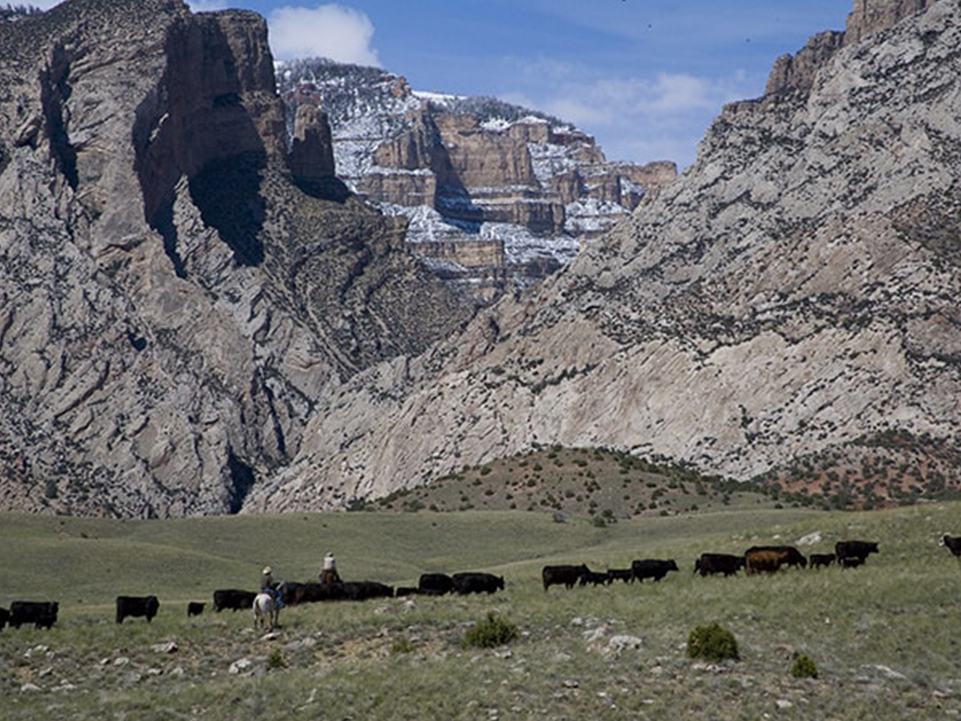
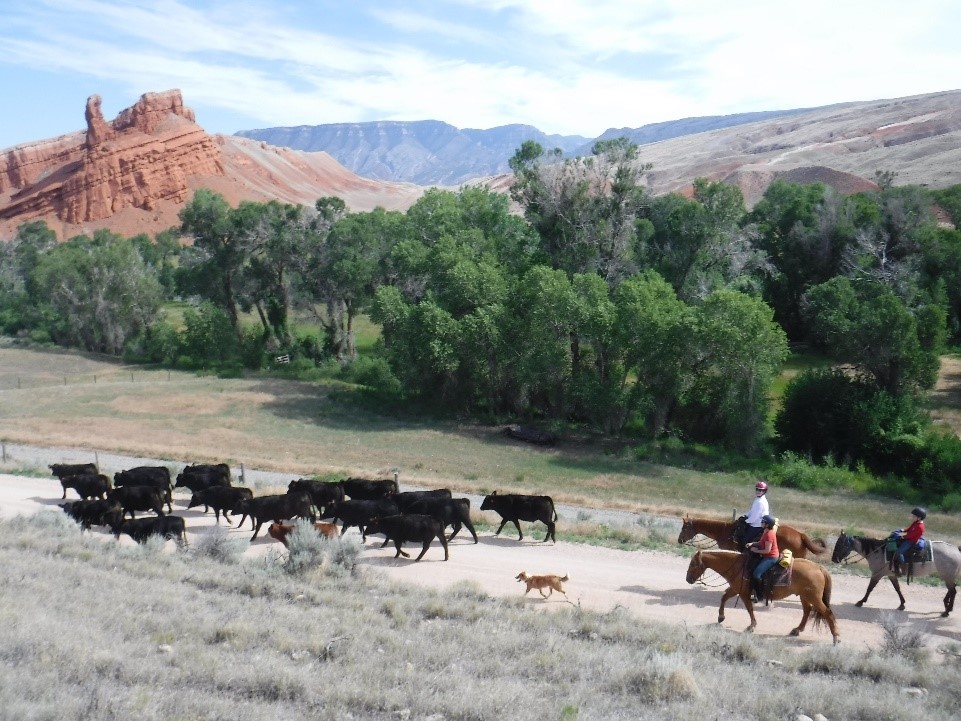
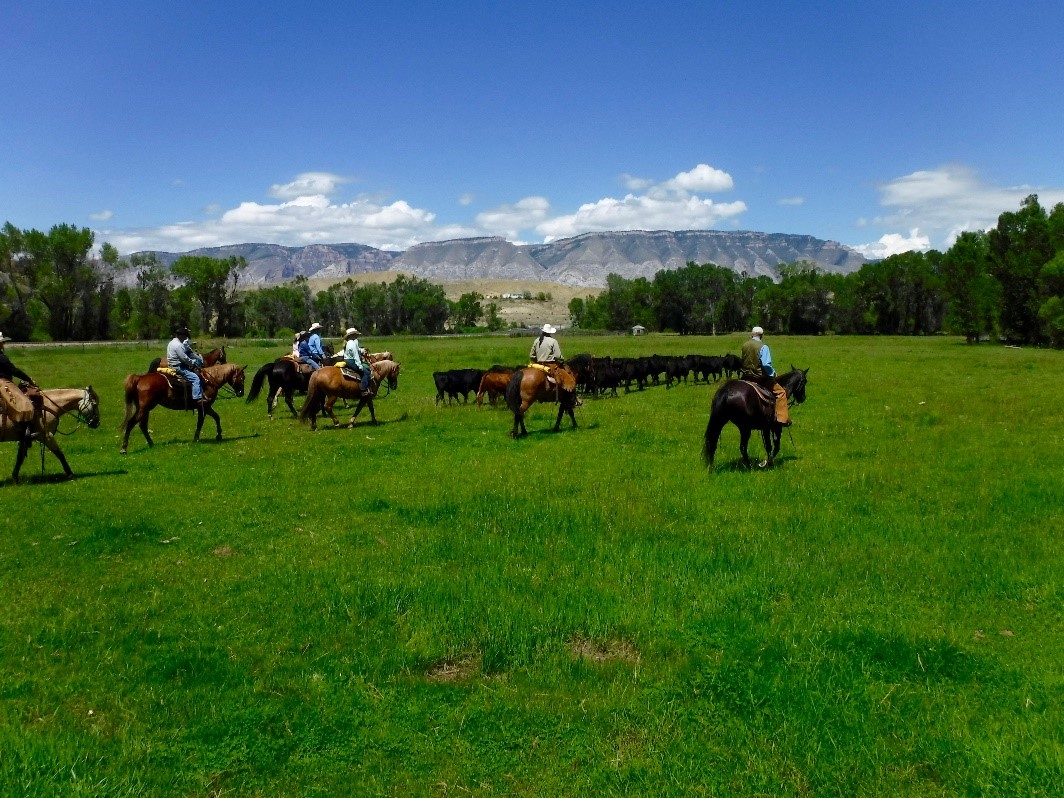
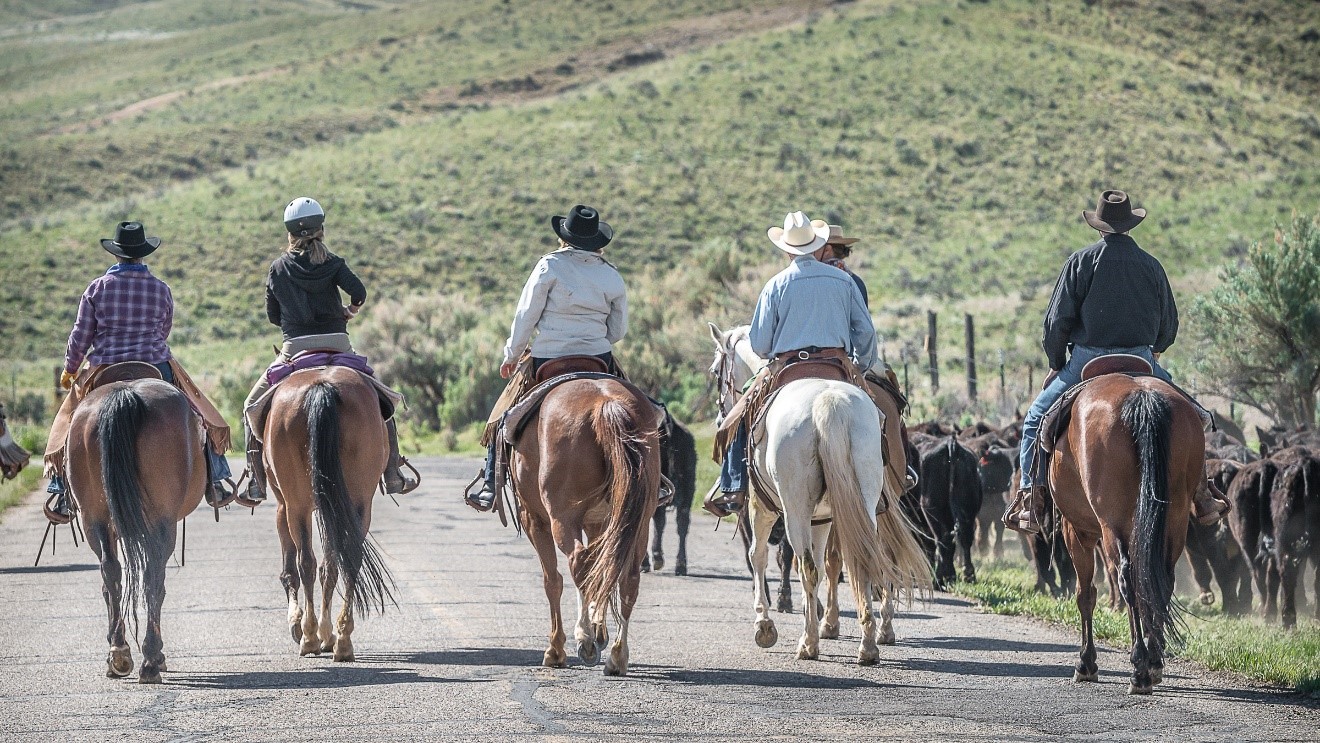
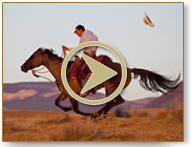
With over 1200 head of Black Angus, their calves, and hundreds of yearlings to herd, there is usually an opportunity for our guests to participate in cattle work. We are located on a real 100-year old operational ranch and the cattle work you participate in during your vacation is real work needed to keep the ranch going. Along with our ranch operation we also farm some 1200 acres of land in the valley. This means that the ranch welcomes your help taking care of the cattle.
Tip: Any level of rider can participate in moving cattle. Different levels of riders will be doing different types of riding and cattle work. However you do NOT need to be an advanced or intermediate rider to participate in our cattle work. Please read more at the end of this page.
Different Seasons – Different Riding
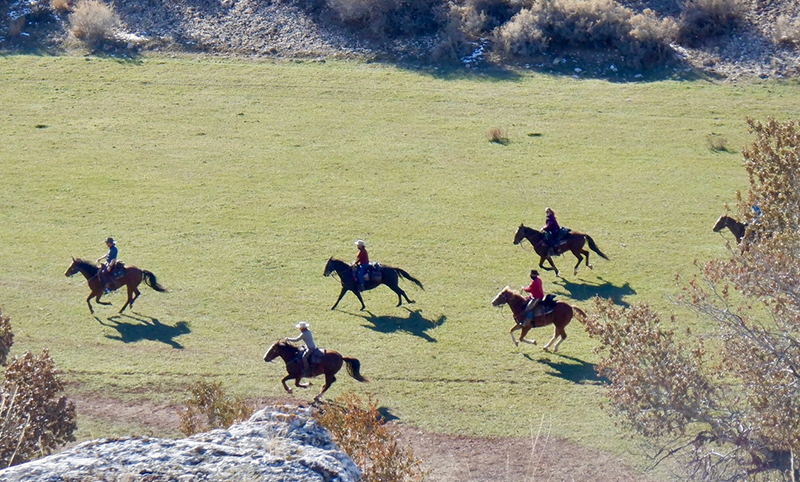
In spring you might ride a 100,000 acre pasture looking for cattle or just explore an area shared with the McCullough Peak Mustangs. Spring is the time of big gatherings, brandings and riding the wide open valley prairies at elevations between 4,200 and 4,800 feet. We typically start rounding up cattle to move them from valley pastures to pastures closer to the mountains. Once the snow has melted off the lower mountains we begin moving them up in small groups.
Tip: During the months of March, April and May there are typically fewer riders than during the summer season which is why some of our repeat guests love to come out that time of the year.
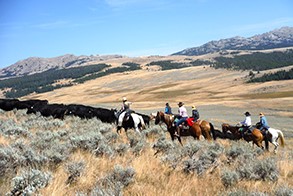
During summer as the snow melts off the higher elevations we move the Flitner Ranch cattle up into the mountains. This is what we call “gaining altitude”. Our herd grazes at elevations up to 11,000 feet. While in the valley the temperatures may vary between 85 and 100F you will enjoy much cooler rides in the mountains varying from 70 to 85F. You will ride private as well as Big Horn National Forest grazing leases and most of the cattle work you participate in is what we call “scenic” cattle work because of the spectacular scenery of the country with pine forests, alpine meadows, creeks and mountain lakes.
In late October and early November we start gathering cattle at the higher elevations to move them lower as the snow starts falling. You could find yourself starting your ride at 7,800 feet in the snow in the morning. During the day you might cross 9,500 feet and end your ride near Trapper Creek Lodge in the red dust at 65 to 75 F. In the morning you will long for a hot coffee or hot chocolate to warm you up, while in the afternoon for a cold drink to cool you down.
Tip: From the 3th week of October through the end of the season there are typically fewer riders and there is a lot of riding needed. Many of our guests have begun to discover this unique riding opportunity.
No matter when you visit, you will not ride the same trail twice in a week, unless you feel like it. Some of our guests have been coming to The Hideout for over 12 years, some more than once a year, and yet they had never taken the new ride to Willet Lake, a clear blue lake at 9,000 feet in the National Forest.
Ride out or Trailer Up
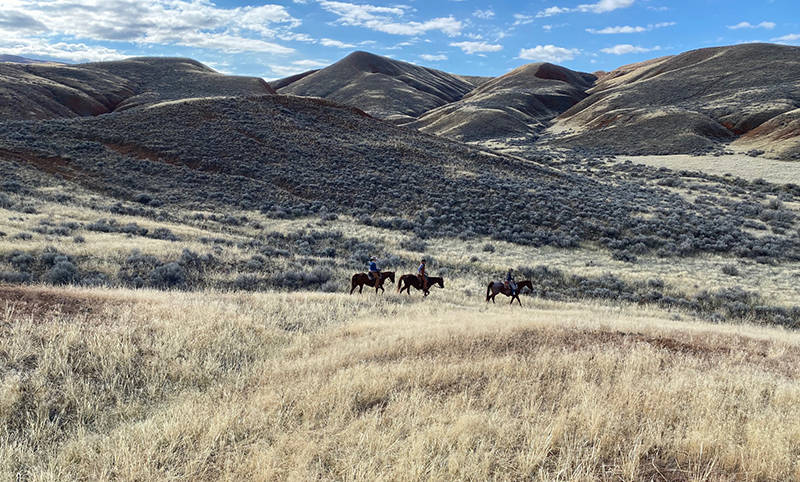
This is a huge 300,000 acre ranch and you will experience the life of real cowboys and outdoorsmen/women in this big country. For some rides you will leave the ranch on horseback. For others we will load up the horses in stock trailers pulled by heavy duty 4x4 trucks and drive to the beginning of a route where no vehicle can travel and only horses can take you. You mount up and go from there on horseback. This is what the real cowboys do every day.
Cattle Work or Cattle Drives
With over 1200 head of Black Angus, their calves, and hundreds of yearlings to herd, there is usually an opportunity for our guests to participate in cattle work.
It is important to differentiate “cattle work” from “cattle drives”. On active operational ranches we talk about cattle work, which defines all actions and ranch work related to handling livestock. This includes gathering, branding, fencing, sorting, searching for cattle, riding fences to see if something needs to be repaired, checking on cattle and of course moving cattle.
“Cattle Drives” typically refers to cattle work that is offered as a tourist attraction for the guests only. At The Hideout you participate in real and much needed work for the ranch side of the operation.
Cattle Work Year-Round – Some weeks more than other weeks.
At The Hideout we do work cattle most weeks of the season. Some weeks there might be one or two days of cattle work. Some weeks even the most “die-hard cowboys” among our guests switch to a day of trail riding, fly-fishing, trapshooting, canoeing or other non-riding activities having seen too much cattle and many hours in the saddle.
Some weeks we move large numbers of livestock, during which we may have to ride many hours in search for a few strays, lost cattle or to round up a couple of mama cows who are hiding their babies in a secret canyon, an alpine forest, a red gulch or near a mountain lake or stream.
We graze private land, BLM (Bureau of Land Management), National Forest Leases and we graze at elevations from 4,200 to above 10,000 feet. It all depends on the time of the year. We practice rotational grazing to protect the environment from overgrazing and constantly move our herd around the property.
Beginning, intermediate or experienced riders.
Cattle work can be enjoyed by all levels of riders. The novice rider might help keep the herd together while the other guests ride out with the wranglers to round up cattle and drive them towards the herd we are moving. Maybe you and one of the cowboys will ride out to sort some strays out of the timber or ride ahead to see if all fences are open or closed.
Toward the end of the season, experienced riders can enjoy long hours in the saddle at wrangler speed to clean out country. This means riding lots of miles to look for the last strays and head them down before the snow falls in the mountains. The same type of activities take place
Scenic Cattle Work
This region offers a rarely seen variety of scenery to please all levels of trail riding and each and every one of our days working cattle on this ranch is like a scenic ride. The Hideout legitimately boasts more genuine and necessary cattle work than any other guest ranch. There is no "make-believe" on our ranch - we offer real cattle work, branding and cattle drives.
At the Hideout, there is always some “cowboying” to do in some of the prettiest country out West.
Stockmanship Initiation
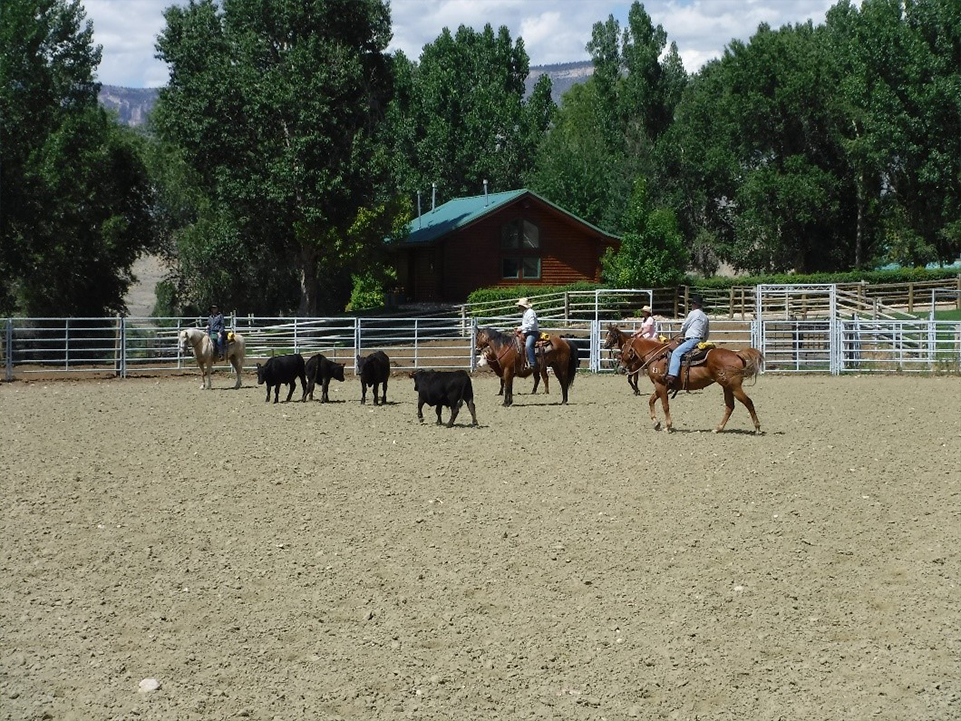
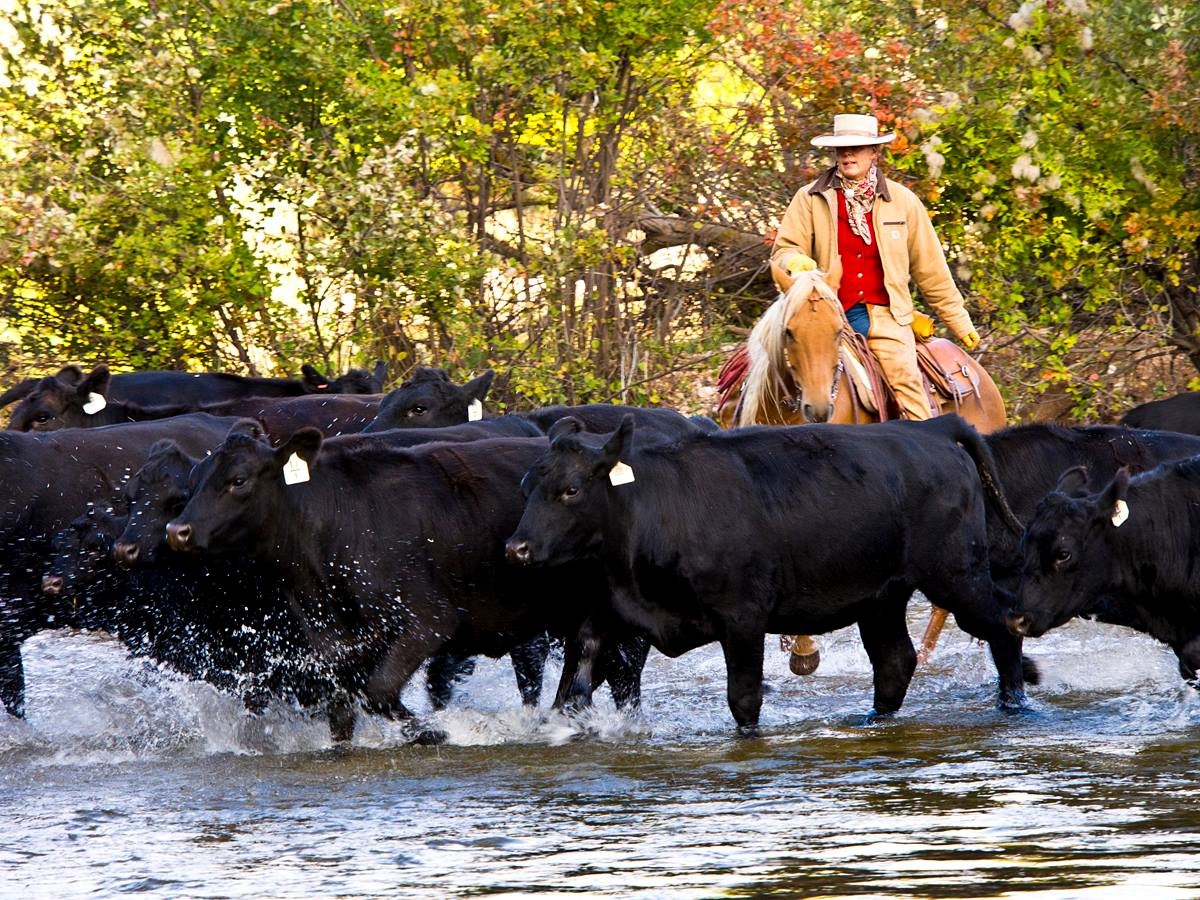
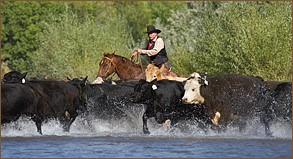
The art of moving cattle in a low stress way is called Stockmanship. We usually have some 20 yearlings at The Hideout who graze our little 200 acre pasture at the creek bottom. A fun day is learning the techniques of moving cattle in the arena and then riding out to gather these 20 naughty boys and girls driving them through the creek, uphill, through the woods and into the arena.
Cattle Games
After this, guests can enjoy team penning, sorting and other “cattle games” on horseback. This is an ideal controlled setting to practice prior to going out on the range to participate in some real work for the ranch. Many guests prefer practicing cattle work with the 20 yearlings compared to the work on the range.
Low Stress Stockmanship and Natural Horsemanship
Our key staff is trained in the Bud Williams Low Stress Stockmanship concept of handling livestock. During your orientation on Monday morning you will learn the basic concepts. We can also organize a one day session during your stay given there are enough participants.
The use of trucks and stock trailers
Cowboys on big ranches like this one all have their heavy duty 4x4 pick-up truck and 8-horse stock trailer. They load up their horses in the morning and drive to where one can only travel on horseback. The horse is unloaded and the cowboy starts his day work. He/She switches horses after several hours and continues to work till the evening when he loads up and drives back to headquarters or his lodge in the mountains.
As a guest you will experience the same thing. This is a huge ranch and during the summer cattle are grazing at higher elevations. Your wrangler will load up your horses in the trailer (6 horses per trailer), and together with his group of guests he goes to where the cattle work needs to be done. The horses are unloaded, bridled and the wrangler and a maximum of five guests per wrangler ride out to do the day’s work on the range. After a hearty and delicious lunch and afternoon work, you return with him at the end of the day, load up the horses and drive back to the home base.
At the barn we unload, unsaddle, brush and feed the horses. Our horses are well trained athletes and we take care of them accordingly. You might be in the saddle between 5 and 8 hours and there are different levels of cattle work. You will appreciate a nice hot shower and a great meal with a glass of wine.
All our trucks are well maintained, equipped with exhaust (Jake) and trailer brakes and our staff are trained in handling this equipment in a safe and effective way.
About Cattle Drives and Cattle Work
Historically, a cattle drive meant trailing cattle a great distance, say from Texas to Wyoming. Today cattle are still trailed from place to place in the American West, but no longer on quite so vast a scale.
Cattle work hinges on range conditions and weather, and sometimes even government regulations. When a guest ranch is able to designate a date for a cattle drive far in advance, it may be made up or pretend for entertainment and/or guest participation. We are seldom able to say in advance exactly when we'll do a long distance drive.
On a ranch as large as this one, we move, doctor, or sort cattle almost on a daily basis. This is why we can tell you that you'll have the opportunity to do more cattle work at the Hideout than you will on any other guest ranch.
Riding, horsemanship, cattle work, fly-fishing and some of the other adventures are the most defining of all of the activities offered at The Hideout. You may have heard that "cowboys are a dying breed." Not so at The Hideout and The Flitner Ranch. Cowboys here are alive and as real as 100 years ago. If you sign up for cattle work, expect to step back in time and come away with a better understanding of what it means to be a cowboy.
Wranglers, Cowgirls, Cowboys and Riding Guides at The Hideout Lodge & Guest Ranch
To enhance your time spent in the saddle, you may experience a rotation of experienced, knowledgeable guides.
Several of our wranglers are year round employees because it takes several years to learn the terrain and the skills to wrangle both guests and cattle and make it a worthwhile, safe and exciting experience. The Hideout takes pride in the high number of repeat guests for whom part of the experience is to see familiar faces they trust year after year.
Our hands are not your typical dude ranch wranglers. They are personable and attentive with guests, and they shoulder much of the responsibility of the care of the cattle. This means you ride with real cowboys and cowgirls and participate in day-to-day ranch activities. The horses you ride are the horses we ride. We take great care in matching horse and rider to assure a safe and enjoyable experience for everyone.
Safety is key
Experience and knowledge are vital to providing our guests the most rewarding rides. You will encounter a wide variety of terrain and it is not uncommon to encounter large temperature variations. Your riding opportunities will change depending on weather, location and difficulty of terrain.
Important
Please also read our page Trail Riding in which you will find more very useful information on riding a The Hideout Lodge & Guest Ranch.


facebook
twitter
blog